AI impact on job markets
Will AI kill software engineering jobs? Here is what tech leaders like Sam Altman are saying
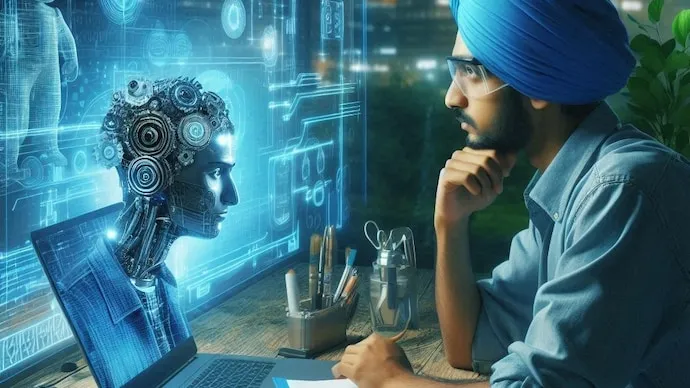

With growing curiosity around whether AI will kill software engineering jobs, here's what top tech leaders have to say about AI's impact on the future of human coders.
As Artificial Intelligence (AI) tools grow more powerful and capable, one of the biggest questions confronting the tech industry today is whether software engineering will remain a viable profession. Some of the biggest names in tech are already hinting at major changes ahead — from reduced demand to a total reshaping of how code gets written. With growing curiosity around whether AI will replace software engineering jobs, here's what top tech leaders have to say about AI’s impact on the future of human coders.
OpenAI CEO Sam Altman
OpenAI CEO Sam Altman believes that software engineers will become far more productive in the short term, but the future might look very different. Speaking on Stratechery with Ben Thompson, he said, "My basic assumption is that each software engineer will just do much, much more for a while. And then at some point, yeah, maybe we do need less software engineers."
Altman also pointed out that in many companies, AI is already doing over half of the coding work.
Anthropic CEO Dario Amodei
Dario Amodei, CEO of AI startup Anthropic, sees the shift happening even faster. He recently predicted that AI could soon be doing nearly all the coding.
"I think, we will be there in three to six months, where AI is writing 90 per cent of the code. And then, in 12 months, we may be in a world where AI is writing essentially all of the code," he said during an event at the Council on Foreign Relations.
OpenAI CTO Kevin Weil
Echoing this aggressive pace of progress, OpenAI’s Chief Product Officer Kevin Weil said on the Overpowered podcast, "At the rate we're going, I would be surprised if it's 2027."
According to him, this is because of how rapidly AI models are evolving.
He gave an example: "Imagine all the things that you can do if you don't need to be an engineer to create software." And while he sees AI overtaking humans in coding ability, he doesn’t see humans going obsolete.
"You're going to be using it day in and day out to augment yourself in your job," he said. "People are going to increasingly be sort of managers of these AI employees that will do a lot of the basic work for them."
Google CEO Sundar Pichai
Google CEO Sundar Pichai also weighed in, sharing that AI is already generating a quarter of all new code at Google. “More than a quarter of all new code at Google is generated by AI,” he wrote in a blog post. However, this code is still reviewed by human engineers, keeping the human element alive in the loop.
Microsoft founder Bill Gates
Bill Gates agrees that AI will transform jobs, but he still sees coders as safe — at least for now. In an appearance on The Tonight Show, Gates listed coders among three professions that are “still irreplaceable.” That said, he admitted that AI will eventually dominate most areas of work.
“With AI, over the next decade, that will become free, commonplace — great medical advice, great tutoring,” he said. Gates added, “There will be some things we reserve for ourselves. But in terms of making things, moving things, and growing food, over time those will be basically solved problems.
Perplexity CEO Aravind Srinivas
Meanwhile, Perplexity CEO Aravind Srinivas described this shift as an evolution of roles rather than outright replacement. With AI writing much of the code, engineers will take on a different kind of responsibility.
"You no longer have to type everything yourself. That’s what’s changed. So, I think people with taste, clarity of thought, and problem-solving skills will really shine in this new era,” he said in a conversation with HackerRank’s CEO.
Replit CEO Amjad Massad
But Replit CEO Amjad Massad offered perhaps the most direct and controversial take on the issue. “As AI agents get better, it would be a waste of time to learn how to code,” he said, referencing Dario Amodei’s projection of complete AI-coded software. While he still believes fundamental thinking skills are important, Massad’s message is clear: focus less on syntax and more on the ability to communicate and problem-solve.
“Learn how to think, learn how to break down problems. Learn how to communicate clearly, as you would with humans, but also with machines,” he advised.
Published on April 8, 2025
Last updated on August 22, 2026
Related Articles
Advanced concurrency java
This is a short description of the blog.

Ai ghibli Image generation effect on environment.
An AI Ghibli image might do more harm than you think

Chatgpt Adoption and Monetization
ChatGPT adoption skyrockets in India, but monetization may be trailing