The End of RSA Algorithm? China’s Quantum Breakthrough Sparks Global Panic
The End of RSA Algorithm? China’s Quantum Breakthrough Sparks Global Panic
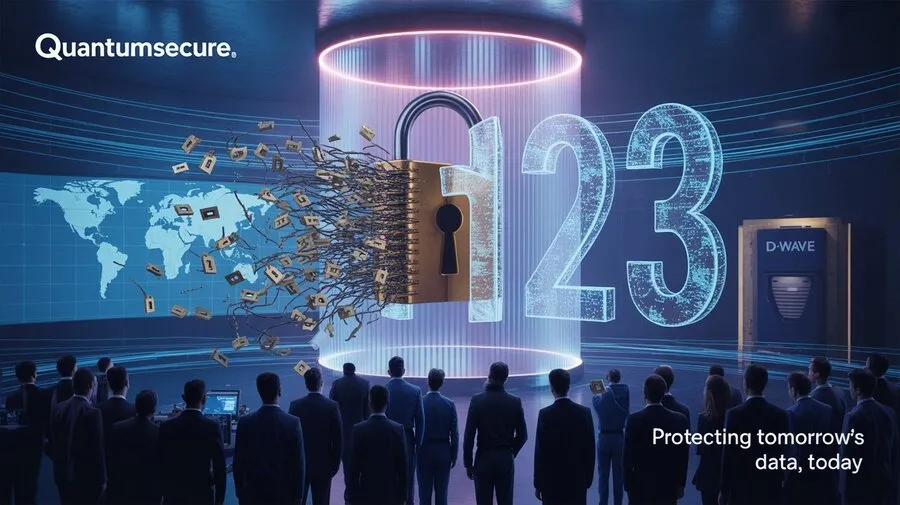

The End of RSA Algorithm? China’s Quantum Breakthrough Sparks Global Panic 🚨
Picture this: you’re texting your best friend, banking online, and all the while, everything you share is locked behind RSA encryption—a fortress that’s kept the digital world safe since the late 1970s. But recently, China waved a shiny new quantum toy at this fortress—and poof!—a 22-bit RSA lock vanished. Cue the global cybersecurity collective gasp.
1. From Thought Experiment to Quantum Reality
RSA’s tough rep is legendary—it’s based on how hard it is to split a massive number into two prime factors. Cracking a 2048-bit RSA key with current hardware? Still a pipe dream. The largest classical crack remains an 829-bit key (“RSA‑250”), which took weeks of supercomputer muscle.
2. Why Tiny Keys Matter in a Quantum Plot
Sure, 22 bits is trivial—your average laptop could handle that in seconds. But the method matters. By recasting factoring as a Quadratic Unconstrained Binary Optimization (QUBO) problem, the team unlocked a quantum-friendly route to crack encryption. They even dabbled in SPN ciphers like Present and Rectangle—core structures behind lightweight encryption—marking the first time a quantum machine has practically threatened those too.
3. Annealing vs. Shor: Two Quantum Roads Diverged
Two quantum highways lead to factoring:
- Shor’s algorithm—built for universal gate-based quantum computers, theoretically smashing RSA in polynomial time, but current gate-machines are noisy and limited in qubit count.
- Quantum annealing—D‑Wave’s approach uses thousands of qubits to tunnel through optimization problems at ultra-cold 15 mK. It’s not universal computation, but for optimization it’s pretty nifty.
4. Echoes in the Standards World
The clock is ticking—and the standards committees know it. In August 2024, NIST rolled out PQC standards: FIPS 203–205, based on lattice problems. By March 11, 2025, NIST added HQC as a 5th key‑encapsulation algorithm, a backup in case its main pick (ML‑KEM) faces a quantum smackdown.
5. Most Businesses: Blissfully Unprepared
If you're in IT or security, this is your wake-up call: despite headlines, most businesses haven’t even tested PQC. Wall Street, finance, and telecom are dipping toes in the quantum pool—but countless smaller organizations are still building sandcastles on the shore.
6. So…What’s Next?
| Step | What to Do |
|---|---|
| 1. Audit | Map ALL places RSA/ECC is used—VPNs, web servers, email. |
| 2. Pilot PQC | Try integrating ML-KEM or HQC into test environments. |
| 3. Hybrid Mode | Use quantum-resistant algorithms alongside RSA/ECC during transition. |
| 4. Monitor | Watch NIST’s timeline—final HQC standard expected ~2027. |
| 5. Educate | Train developers, execs, and legal teams on what “Q-day” means. |
Final Thought: Not Tomorrow—But Sooner Than You Think
No, RSA-2048 hasn’t been quantum-cracked yet. Yes, the 22-bit feat is only toddler-level—but toddlers grow fast. These lab-scale wins serve as the canary in the cryptographic coal mine. Classic story structure: threat arises, heroes prepare—or get blindsided. In our case, you are the hero. Time to suit up for the quantum dawn—with humor, stories, and a solid plan—before Lockdown Q transforms from theory into break-in.
Comic epilogue
Imagine a quantum computer dressed like a mischievous cartoon burglar, tip‑toeing through your data vault. For now, it trips on the 2048‑bit shim—but it’s learning, evolving…and the real break‑in could be just around the corner.
💡 Stay ahead. Don’t let your encryption be yesterday’s news.
Published on July 2, 2025
Last updated on October 5, 2026